
Tokyo – a big city with all its noises, crowds of people everywhere – especially on the trains – , skyscrapers, neon lights, smog, etc. Most people, I guess, associate Tokyo with this. However, my experience was almost the opposite: I saw a city of silence, not too crowded, with space and lots of green areas. In this blog post I will share my experience of Tokyo and the Japanese culture. The historical facts, I heard from guides and from my friends.
First, I will show how I spent each day, Day 1 – 7; second, I will give some general advice and suggestions about what to eat. As a language lover, I just have to give some glossary and finally, a short paragraph about the book I read on this trip.
Arriving at Narita Airport
My Japanese friend met me at the airport and we took the local train to a small town called Yotsukaido. When we walked from the station, she told me that the town looked the same as it did 30 years ago. This surprised me since I’d always thought that Japan was a country of development and change. Yes, she said, that’s true when it comes to inventions but they don’t change the architecture in small towns. It looked a little old-fashioned but cozy and genuine. We were staying with a Japanese family – friends of hers – so I was lucky to have the chance to experience true Japanese culture.
Day 1 – Tokyo Station, Akihabara, Owl Cafe
My friends and I took the train from Yotsukaido into Tokyo Station (one hour). People were standing in line before entering the train and respecting that other people got off first. On the train, I noticed the silence. The only sound was the announcement of next station and now and then reminders about keeping the mobile phone in silence mode and not to talk on the phone. People were looking at their phones (like everywhere) but no one was talking and there were no sounds of text messages or alarms! This gave an unusual calmness even though there were quite a lot of people. So, that was the first encounter with Silence in a crowd. No one stressed and everybody was polite and respectful.
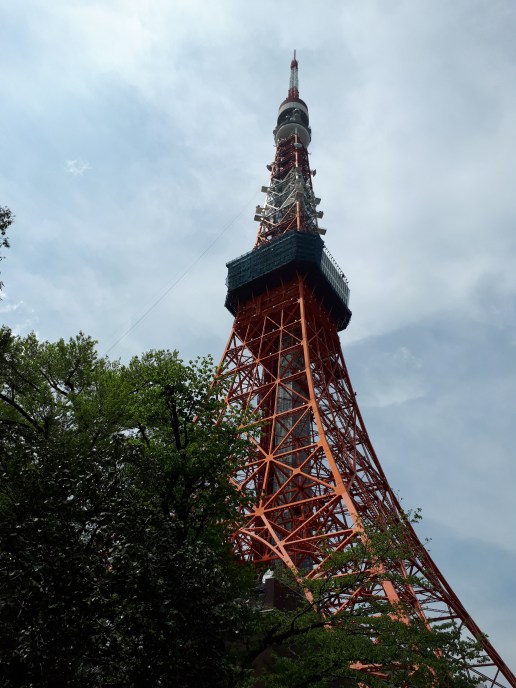
At Tokyo Station, we took a one-hour tourist bus tour, HATO bus. This was a good way to get a general view of the city. Among others, we went on the Express Highway which made me think of Murakami’s trilogy 1Q84. We crossed the Rainbow Bridge, 798 meters – finished in 1993. We drove past Tokyo Tower, 333 meters high – which in my opinion looked more like a construction than a finished Tower (an Eiffel Tower-wanna-be).
When we got off the bus, we walked through Kanda – an area with many restaurants. But where were all the people? I really wondered because the streets were almost empty. We reached Akihabara – an area with a lot of electronic shopping places. We passed Okachimachi Station and from there up to Ueno Station, there were a lot of shops; small boutiques, a market street. We found an Owl Cafe – a cafe with living owls. I am an animal lover so for me it is important to see that the animals are treated well and respectfully. In this cafe, my impression was that the owls were in good health. The staff gave clear instructions of how to behave and it was very important to be gentle when touching the owls. Also, there was a limit of how many people they allowed at the same time. The owls had beautiful and well treated feathers and they were just so cool!
Day 2 – Sakura, Samurai Houses, Zento Bath
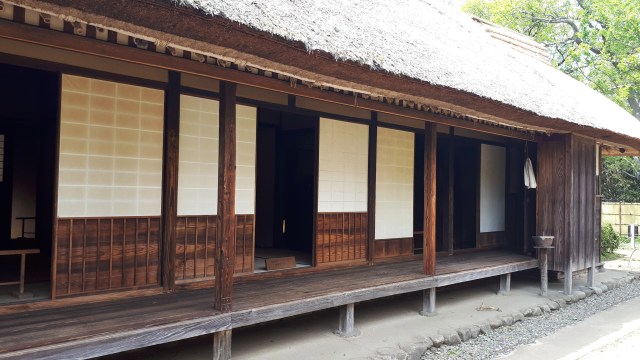
Sakura is a small town between Yotsukaido and Narita – really worth a visit. We visited the Sakura City Samurai Houses which gave a good idea of how the Samurai lived in the Edo period (1603-1868).
You’ve probably heard of Sakura but in the meaning of Cherry Blossom. It is both a place (this town that we visited) and the meaning of Cherry Blossom. However, the difference is in the pronunciation:
Sakura – with a stress on the first syllable – is the name of this town
Sakura – with a stress on the last syllable – means Cherry Blossom
In the afternoon we went back to Yotsukaido and spend a couple of hours in a public bath – Zento (not to confound with Onzen which means hot spring). The Zento bath was a relax area – men and women divided (so, everyone was naked). First, you started with a cleaning and shower ceremony – I just followed my friends – and then you went to the different pools to relax. Bubble pools, pools with bicarbonate (allegedly good for your skin), outside pools, cold and hot pools. A place of Mindfulness. Good for the spirit – and afterwards – a nice cold beer!
Day 3 – Narita, Drum Festival, Historic tour
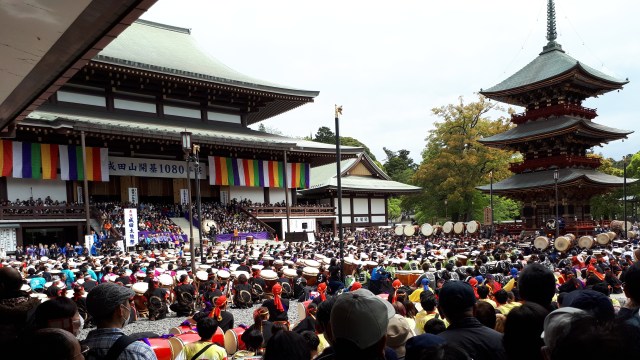
Once a year, there is a drum festival in the town of Narita. By chance this was now so I was lucky to be there. It took place in the Naritasan Shinshoji Temple. Forty seven groups from all over Japan were gathered and for one hour, each group played their piece of music. At the end of the concert all groups played together which was amazing! I could feel the rhythm and the sound in my body and I got goosebumps. I felt a special kind of unison being there. Impressive!
After the concert, we went on a guided tour – one guide and the three of us – so, I asked a lot of questions all the time and I noted everything down in my little notebook; so here, some of my notes:
The bell and the three story pagoda is over 300 years old.
The dragon symbolizes water – which protects from fire – so that is why you often see dragons on the buildings.
There was a fire ritual with Goma Sticks: you write your wishes, let them burn in the fire so the wishes go to the gods.
Many buildings had a wood joinery – a construction without nails so that in case of an earthquake or typhoon, the building can sway. The pillars are made of Zelkova tree which is hard wood that doesn’t easily break.
I learned that this area was one temple but with several buildings. In Japan there are many temples and many shrines and the difference is that a shrine is from Shintoism and a temple is from Buddhism.
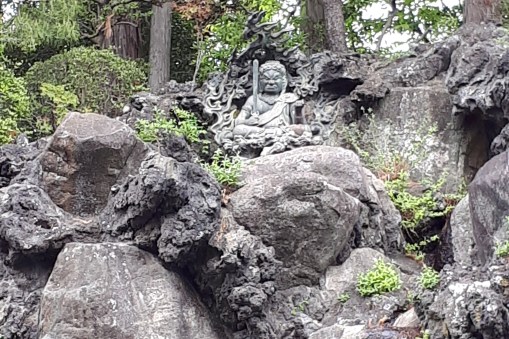
You probably recognize the Buddha with an evil looking face – Fudo Myoo – however, I was told that he is not mad; his look signifies determination.
Day 4 – Shinjuku, Samurai Museum, Godzilla
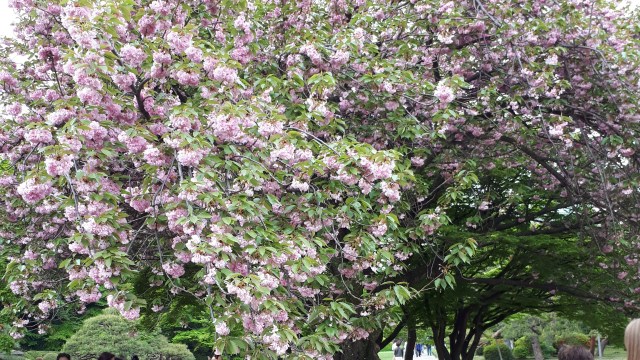
I wanted to see Shinjuku since I had read books by Murakami with settings in that area. Shinjuku is the most crowded and touristic area in Tokyo – what I usually try to avoid – however, I still wanted to see it. I was surprised. Yes, the station was crowded but I avoided rush hour. And I was smart enough to choose a Sunday. First, I went to Shinjuku Gyoen National Garden, a nice oasis in the middle of the big city with the cherry blossom at its final stage. It was when I walked back from the park out on the street that it hit me how silent it was. I was walking on a big street and there was traffic and many cars but no sounds, no klaxon, no sirens. The only sounds were from the crosswalks letting you know whether you could cross the street or not. The sound was birdlike, however, not too much to confound with a real bird. People walking on the streets were in no hurry and no one was talking on their cell phones.
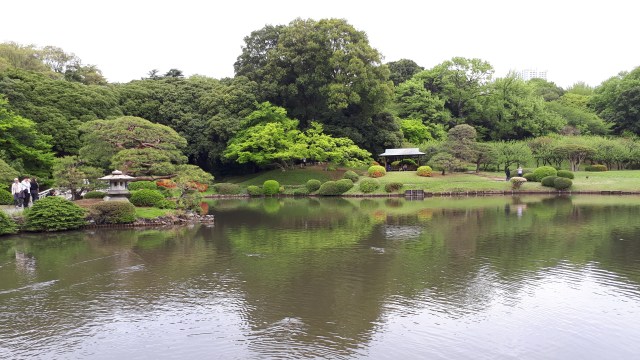
Japanese style garden:
The Samurai Museum – highly recommended!
Whether you are interested in history or not, this museum was fun and interesting. When you buy your ticket, you get a time to be there (I had to wait 30 minutes) and then you go with a guide who tells you all about the history of the Samurais and at the end of the tour, you will see a show where a Samurai actor performs with his sword. A work of art!
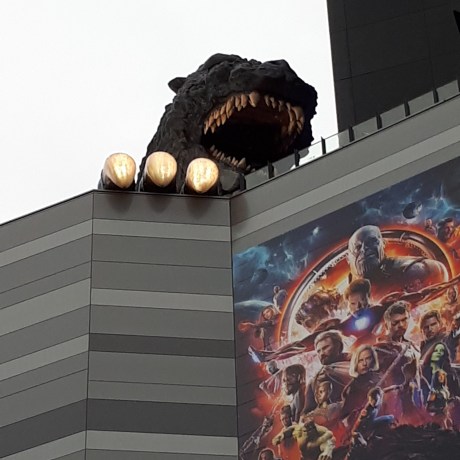
While waiting for the guided tour at the museum, I took advantage of time by finding Godzilla on the roof:
Day 5 – Tokyo, Harajuku, Meiji Shrine
To the south of Shinjuku, there is an area called Harajuku with lots of shopping streets and many owl- and cat cafes. I just walked and enjoyed the atmosphere before I went into another oasis in the city of Tokyo: Meiji Shrine is one of the biggest tourist attractions in Tokyo and it is beautifully placed in the park with much green and nature.
When I had entered the park, two women asked me for help. They were still training as guides and needed to practice their guiding skills and their English. They were very clear about not charging anything and they would not accept tip. It should take 15-20 minutes but since I always ask a lot of questions, it took half an hour. And it was great, I felt lucky because without them, I wouldn’t have learned these facts about the place:
The trees in the park are planted; they are donations from all over Japan. Nowhere else in the ecosystem are there so many different species. And you can really see the various plants and trees mixed. If I hadn’t known this, I wouldn’t have looked so closely at the vegetation.
Meiji was an emperor, buried in the shrine – therefore the name. He lived in the period after Edo which signifies a very important change in Japan. For more than 250 years, Japan was isolated from the world and with Meiji there was a change in the Empire of Japan.
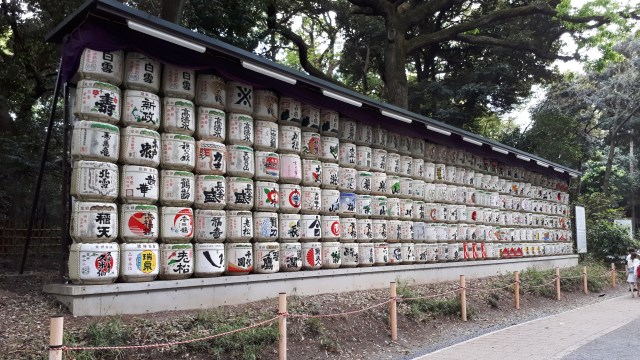
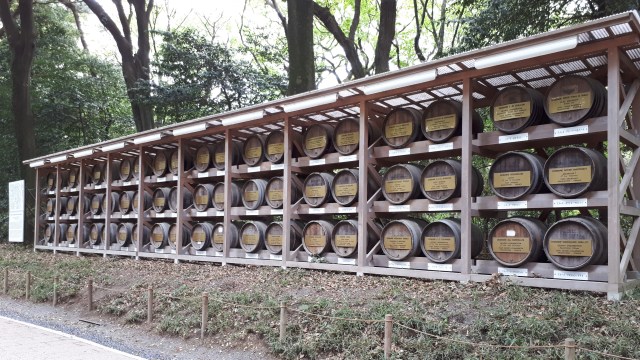
On the way to the shrine, you will see a lot of barrels: 200 barrels of sake. According to Shintoism, sake purifies. There are also wine barrels from Bourgogne and these are donations to promote amity between Japan and France.
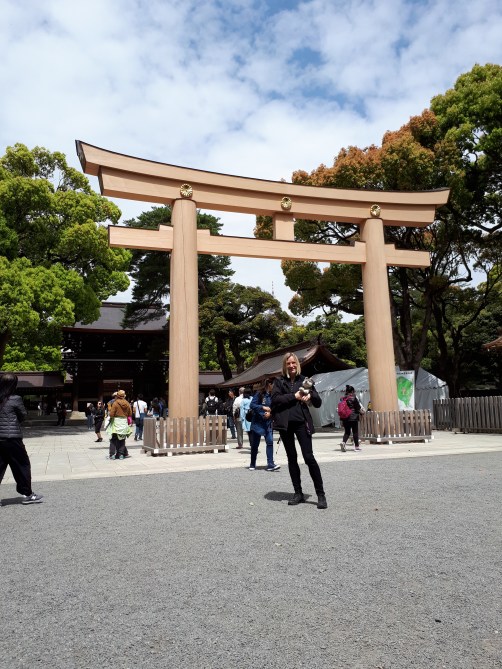
The gate into the area is called torii – gate of the sacred area. You should avoid to enter at the center which is for gods and goddesses, better to enter on the side (and bow before you go in).
Day 6 – Tokyo, Ueno Park, Sensoji Temple
My last day in Tokyo city. I was keen to go to Ueno Park and Ueno Zoo.
Bad choice! Don’t go to the zoo! Please, don’t support the maltreatment of animals! It was a really sad experience and I cried when I realised how awful the conditions were for the animals. They had no space to move, no space to run or to hide. They were just forced to be exposed. You could see how sad they were and that their skin and fur were in a bad shape. I just felt like shouting to all the people – don’t you see??? So I got out of there quickly; it was terrible!
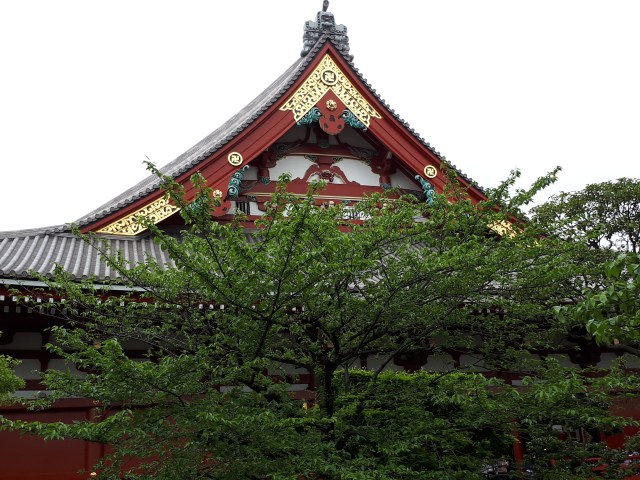
Well, I headed for the last tourist attraction on this visit: Sensoji Temple, the oldest temple in Tokyo, built in 628 A. D. It was beautiful (and crowded…)
Day 7 – Yotsukaido and Zento bath again
My last day before going back to Scandinavia. It was rainy and quite cold but after going to and from Tokyo by train, I was glad to spend a day with no goals and just relax. I went with my friends to the public bath again, a nice last thing to do after a week with a many new experiences.
General advice and experiences
The first advise that my friend gave me when she picked me up at Narita Airport was to take brochures at the tourist office upon arrival since it can be difficult to find brochures in English in Tokyo.
If you arrive to Narita airport and are going into Tokyo center, you can take the Narita Express train – which I recommend, since the local trains take much longer time.
One thing I really love about Japan is that there are toilets everywhere! Most of them are modern which means that they have warm seats and automatic flushing.
If you want to buy Japanese porcelain: bowls, cups, plates and cans: go to Asakusa Dori Street (on the way to Sensoji Temple from Ueno). Also, next to the temple area, there is a bazaar with many porcelain shops (and other shops).
The Japanese people are very helpful and polite and they don’t accept tip. Their knowledge of the English language is often limited but they always try to help and they appreciate if you know some words in Japanese.
What to eat
The Japanese cuisine is one of my favourites; it has been since the first time I ate sushi in Stockholm in the beginning of the nineteen-nineties. Eating Japanese food in Japan is really extra delicious, here are some recommendations:
Okonomiyaki – a Japanese pancake – delicious!
Udon noodles – thick Japanese noodles (often in a soup)
Running sushi (sushi rolling on small plates on a belt where you pick the ones you want) – much more varieties than I’ve had in Europe.
Eel – delicacy, however special. You either love it or detest it.
Ramen – soup with noodles (thick or thin), can be with meat and or vegetables.
Language
I love languages and I always wish to understand and learn some words and expressions when I travel. The Japanese language is not that difficult, actually. However, my problem was to remember the words since they are so different from the Germanic and Roman languages that I know of. Here is some vocabulary:
Mizu = water
Onegaishimasu = please
Itadakimasu = have a good meal
Domo arigato gozaimasu = thank you very much
Ogenki desu ka? = how are you?
Hai arigato gozaimasu = good, thanks
Anata Wa? = and you?
Genki desu = I’m fine
Sumimasen = sorry, excuse me
Gomennasai = I’m sorry
Kudasai = impossible to translate on its own but you hear it everywhere; it’s a kind of polite additional word
Wakarimashita = I understand
Wakarimasen = I don’t understand
Do ita chimasute = you’re welcome
Literature
I read Murakami’s Kafka on the Beach. I found it “typical” Murakami – unpredictable and with a turn that I didn’t expect. However, at the same time, places and some characters reminded about other books that I’ve read by him. It was fun reading this book while being in Japan and knowing some places in Tokyo that he wrote about.
Arigato for reading my blog post!
 The Book Runner
Vilken intressant läsning, nu blev jag ännu mer inspirerad att åka till Japan. Tack! 🙂
GillaGillad av 1 person